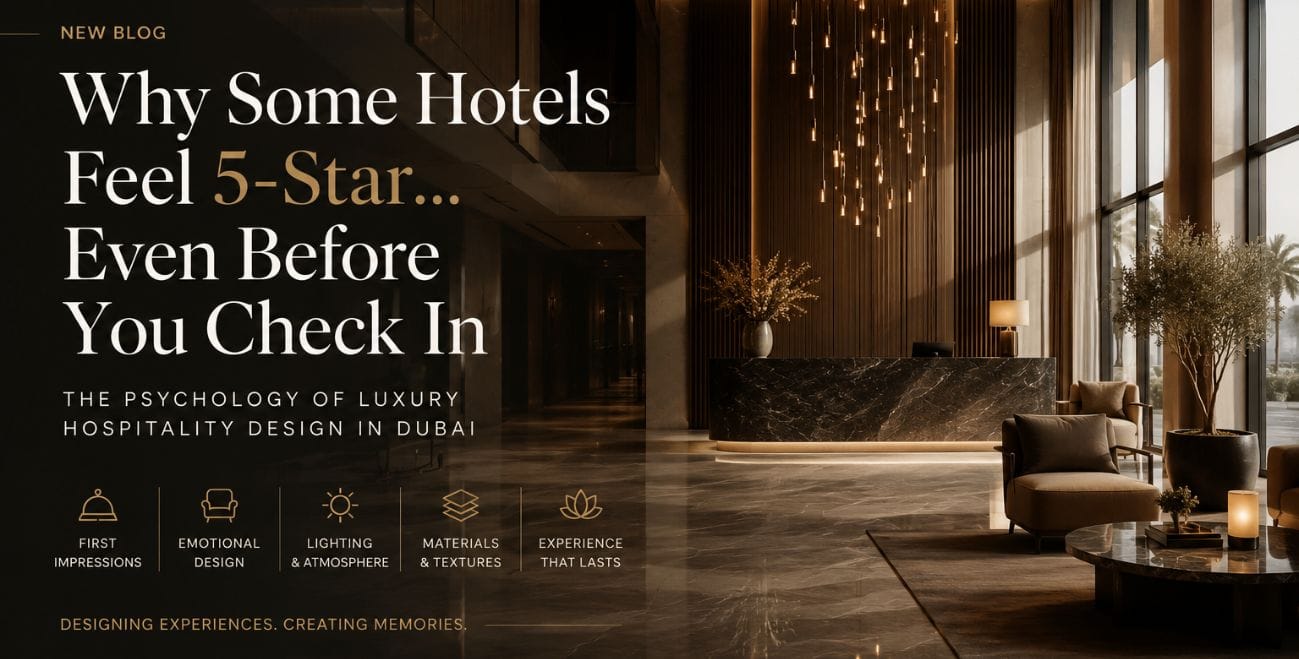
Why Some Hotels Feel 5-Star… Even Before You Check In
The Psychology of Luxury Hospitality Design in Dubai
Before a guest reaches reception, something important has already happened.
A feeling has formed.
The lighting, scent, silence, materials, and flow of the space begin shaping emotional perception within seconds. Guests may never consciously analyze these details, but they feel them immediately.
This is the true power of luxury hospitality interior design.
In Dubai’s highly competitive hotel industry, exceptional hotels are no longer defined only by beautiful decoration or expensive materials. They are defined by atmosphere, emotional comfort, and how naturally the guest experience unfolds.
Because truly memorable hotels begin long before check-in.
Luxury Hospitality Design in Dubai Has Evolved
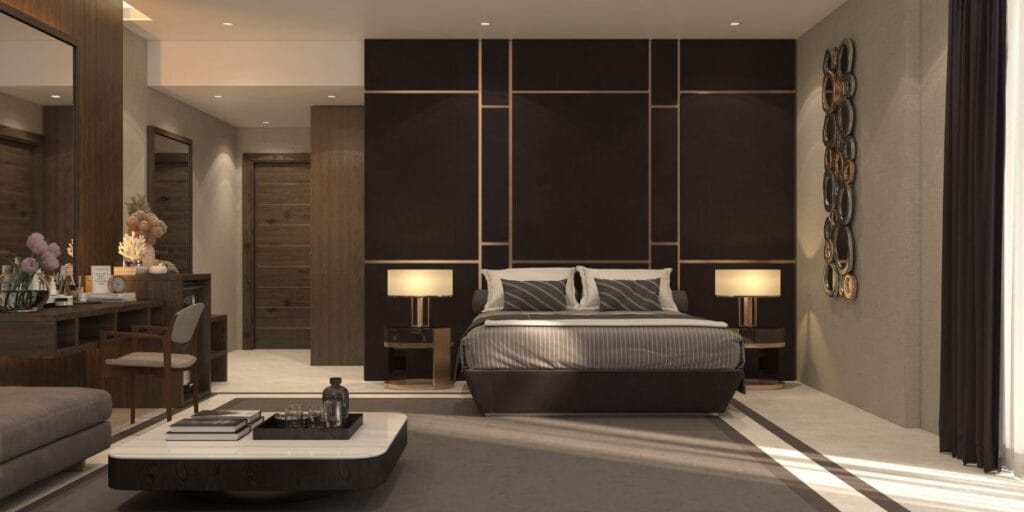
Dubai has become one of the world’s leading luxury hospitality destinations. Modern travelers arrive having experienced luxury hotels, resorts, and boutique hospitality brands across Europe, Asia, and the Middle East.
As expectations evolve, hotel interior design in Dubai has moved far beyond aesthetics alone.
Today’s luxury hospitality spaces must create:
- emotional comfort,
- visual calmness,
- seamless movement,
- sensory balance,
- and memorable guest experiences.
Guests no longer want spaces that simply look luxurious.
They want spaces that feel intentional.
First Impressions Define the Entire Experience
Some hotels feel expensive.
Others feel luxurious.
There is a difference.
A hotel can contain marble, chandeliers, and premium finishes yet still feel cold or overwhelming. Meanwhile, another hotel may use softer lighting, warm textures, balanced proportions, and thoughtful space planning to create a far more powerful emotional response.
This is where hospitality design becomes psychological.
The arrival experience matters deeply:
- entrance design,
- lobby atmosphere,
- lighting transitions,
- acoustic comfort,
- and spatial flow
all shape how guests emotionally experience the property within moments.
Luxury hotels understand that the space itself begins communicating before staff ever speak.
Why Lighting Matters So Much in Hotel Design
Lighting is one of the most important elements in hospitality interior design.
In luxury hotels, lighting should never feel harsh or overly bright. Instead, it should feel layered, calm, and adaptive throughout the day.
Modern hotel lighting design often combines:
- ambient lighting for atmosphere,
- accent lighting for depth,
- decorative lighting for identity,
- and task lighting for functionality.
When done correctly, guests rarely notice the lighting itself.
They simply feel comfortable inside the space.
And in luxury hospitality, comfort is one of the highest forms of sophistication.
The Rise of Quiet Luxury in Hospitality Interiors
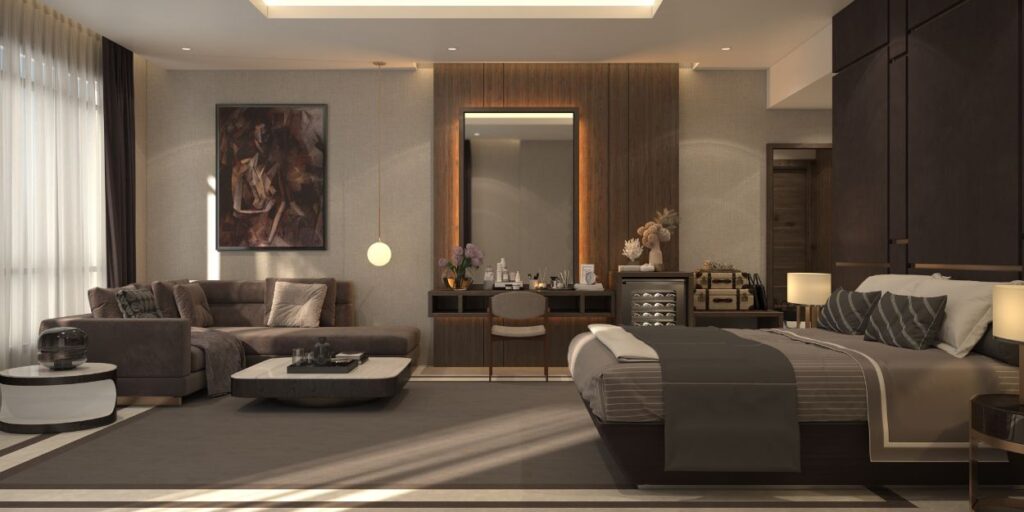
Many of today’s most elegant hotels focus on what designers now call “quiet luxury.”
Rather than relying on visual excess, quiet luxury emphasizes:
- warm wood textures,
- natural stone,
- soft fabrics,
- muted palettes,
- and balanced material harmony.
This style creates emotional calmness rather than overstimulation.
In Dubai’s visually competitive hospitality market, this restrained sophistication often stands out more than overly decorative interiors.
Because modern guests are not only searching for beauty.
They are searching for relief, comfort, and emotional ease.
Why Well-Designed Hotel Rooms Feel Effortless
A luxury hotel room should feel intuitive from the moment the guest enters.
This happens through thoughtful hospitality space planning, including:
- balanced proportions,
- functional zoning,
- integrated storage,
- visual simplicity,
- and clear circulation.
The guest should not need to think about how the room works.
The room should simply feel natural.
This is one of the most overlooked aspects of successful hotel room interior design in Dubai.
When friction disappears, relaxation begins.
And relaxation creates emotional attachment to the space.
The Lobby Is the Emotional Heart of the Hotel
In hospitality design, the lobby is far more than a waiting area.
It is the emotional center of the property.
The best luxury hotel lobbies create:
- openness without emptiness,
- intimacy without confinement,
- elegance without excess,
- and comfort without visual noise.
Successful lobby design is carefully shaped through:
- architectural scale,
- furniture placement,
- lighting,
- acoustics,
- and material selection.
When these elements work together, guests naturally slow down, relax, and emotionally connect with the environment.
Luxury Hospitality Design Also Impacts Business Performance
Luxury hospitality interior design is not only about appearance.
It directly affects:
- guest satisfaction,
- online reviews,
- repeat bookings,
- customer loyalty,
- and hotel brand perception.
In Dubai’s hospitality market, where guest expectations are extremely high, emotionally intelligent design has become a major competitive advantage.
Guests increasingly remember hotels that feel:
- calming,
- refined,
- timeless,
- and emotionally comfortable.
This is why thoughtful hotel design is now considered part of the guest experience itself.
Designing Hospitality Spaces in the UAE
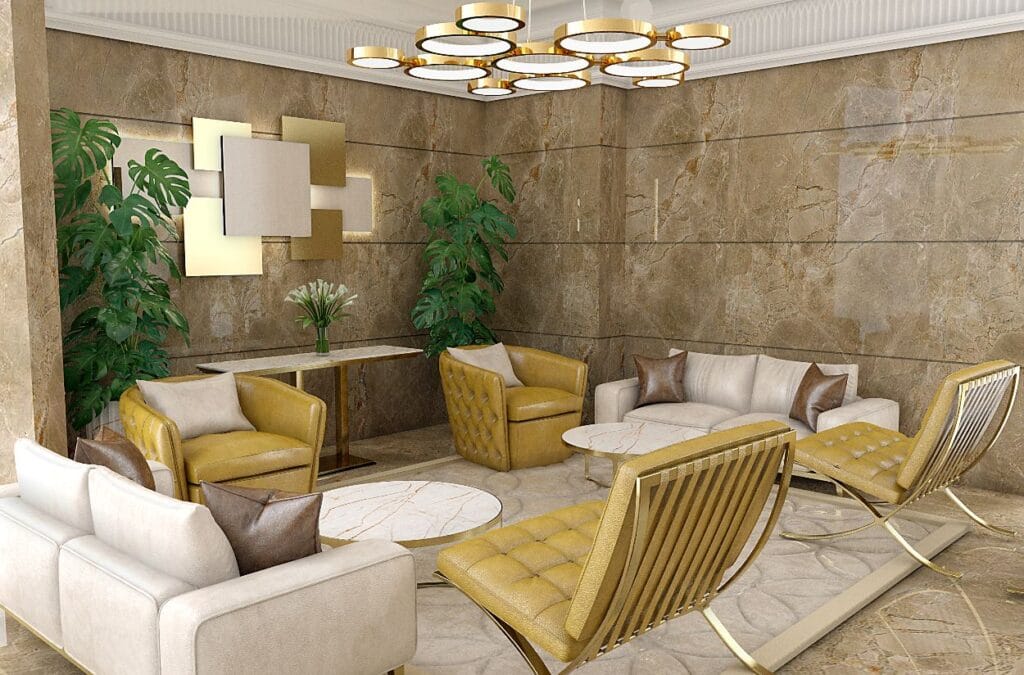
Hospitality design in the UAE exists within a unique cultural and environmental context.
Hotels must balance:
- international luxury expectations,
- regional identity,
- climate-conscious design,
- modern elegance,
- and practical comfort.
The most successful hospitality interiors in Dubai achieve this balance quietly and naturally.
They feel globally refined while remaining deeply human.
Final Reflection
At the end of a hotel stay, guests rarely remember every furniture detail or decorative object.
But they remember how the space made them feel.
They remember the calmness of the room.
The warmth of the lighting.
The silence of the corridors.
The comfort that arrived almost immediately.
And perhaps this is the true art of luxury hospitality design.
Creating spaces that speak softly — yet remain unforgettable long after the guest leaves.