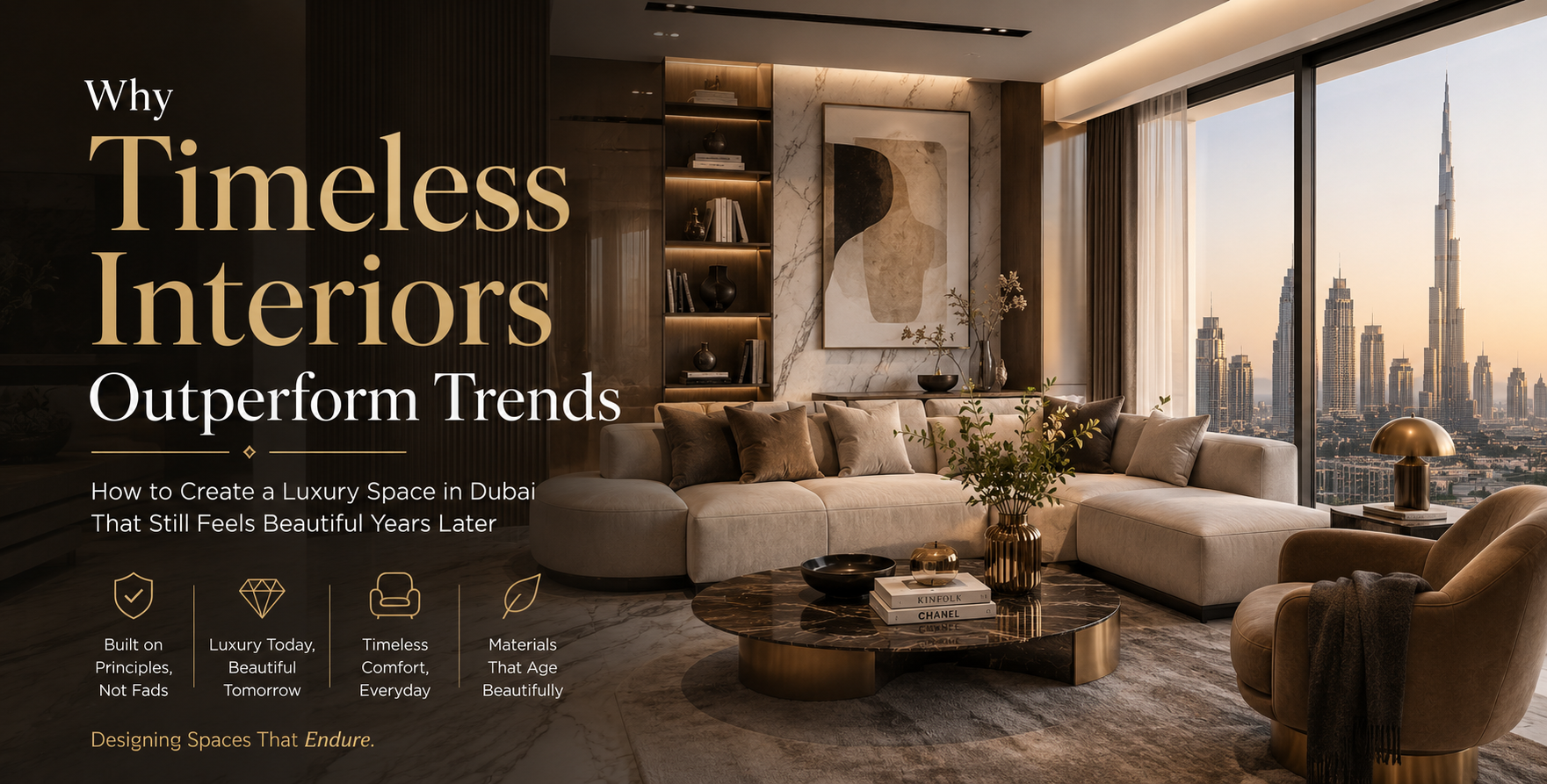
Why Timeless Interiors Outperform Trends

Why Timeless Interiors Outperform Trends

How to Create a Luxury Space in Dubai That Still Feels Beautiful Years Later

Luxury interior design trends constantly evolve. One year, curved furniture dominates design magazines. The next, minimalist interiors return. Social media continuously introduces new colors, materials, layouts, and aesthetics that quickly become popular across homes, hotels, offices, and retail spaces.

In a fast-moving city like Dubai, where innovation and luxury are deeply connected to lifestyle, trends spread rapidly. Clients naturally want interiors that feel modern, elegant, and visually impressive.

There is nothing wrong with following trends.

Trends inspire creativity. They introduce fresh perspectives and help designers explore new ideas.

However, the challenge begins when an entire interior is designed around what is fashionable today without considering how it will feel years later.

Because true luxury interior design is not only about creating a strong first impression.

It is about creating a lasting one.

The Problem With Trend-Driven Interiors

Many interiors look extraordinary when they are first completed.

The photography looks stunning.
Guests feel impressed.
Social media engagement increases.
Everything feels exciting and new.

But over time, something changes.

Design trends that once felt unique begin appearing everywhere. The excitement fades, and the interior slowly becomes tied to a specific design era instead of feeling timeless and refined.

This is one of the biggest risks of trend-driven interiors.

Trends are designed to evolve.

Timeless interior design is designed to endure.

The world’s most admired luxury villas, hospitality spaces, hotels, and residences are rarely remembered because they followed trends. They are remembered because they created environments that remained beautiful, comfortable, and relevant for years.

One approach follows fashion.

The other follows human nature.

What Timeless Interior Design Really Means
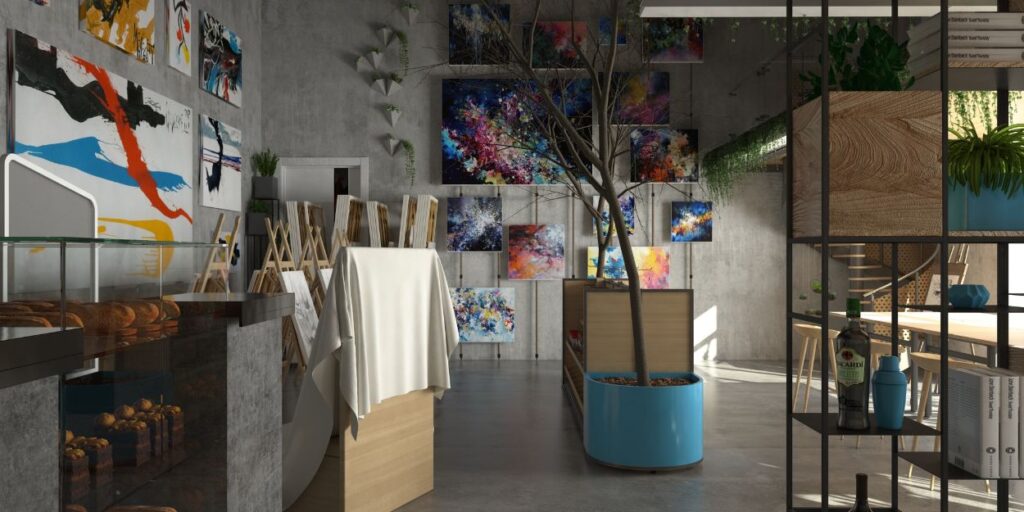
Atelier Art and Coffee Bar

Many people assume timeless interior design means playing it safe or avoiding creativity.

That is not true.

Timeless interiors are not boring interiors.

They are simply designed around principles instead of temporary trends.

These principles include:

  • Balance
  • Proportion
  • Quality materials
  • Thoughtful lighting
  • Functional layouts
  • Refined craftsmanship
  • Human-centered design

A well-proportioned room will always feel comfortable.

Natural materials will always feel authentic.

Quality craftsmanship will always be appreciated.

Comfort will always matter.

These qualities remain valuable regardless of changing trends.

This is why timeless luxury interiors continue to feel elegant even decades later.

Why Luxury and Timelessness Naturally Work Together

Luxury and timelessness share one important characteristic:

Both rely on confidence rather than attention.

Trend-focused interiors often try to stand out immediately.

Timeless luxury interiors do not need to demand attention. Their sophistication comes from balance, quality, and emotional comfort.

This is why many of the world’s most respected luxury hotels, residences, and hospitality spaces focus on:

  • Authentic materials
  • Elegant detailing
  • Exceptional craftsmanship
  • Balanced lighting
  • Calm atmospheres
  • Functional comfort

These spaces rarely feel outdated because they were never designed around temporary excitement.

They were designed around lasting value.

Modern luxury is often quieter, more refined, and more emotionally intelligent.

Luxury Interior Design in Dubai: Designing for Today and Tomorrow
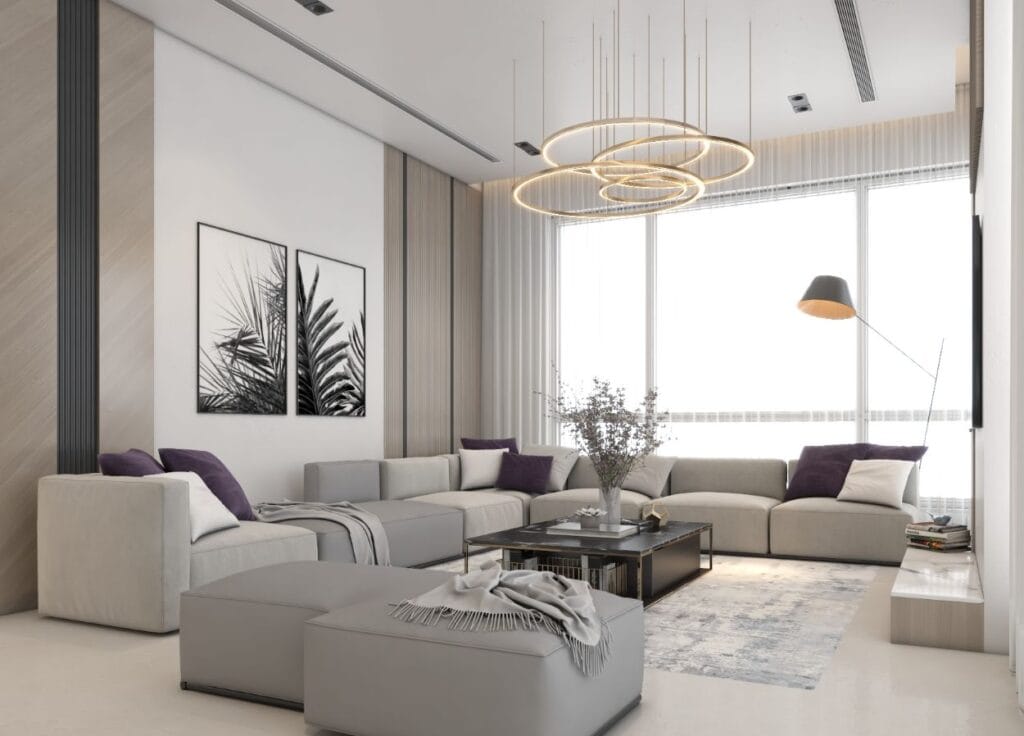
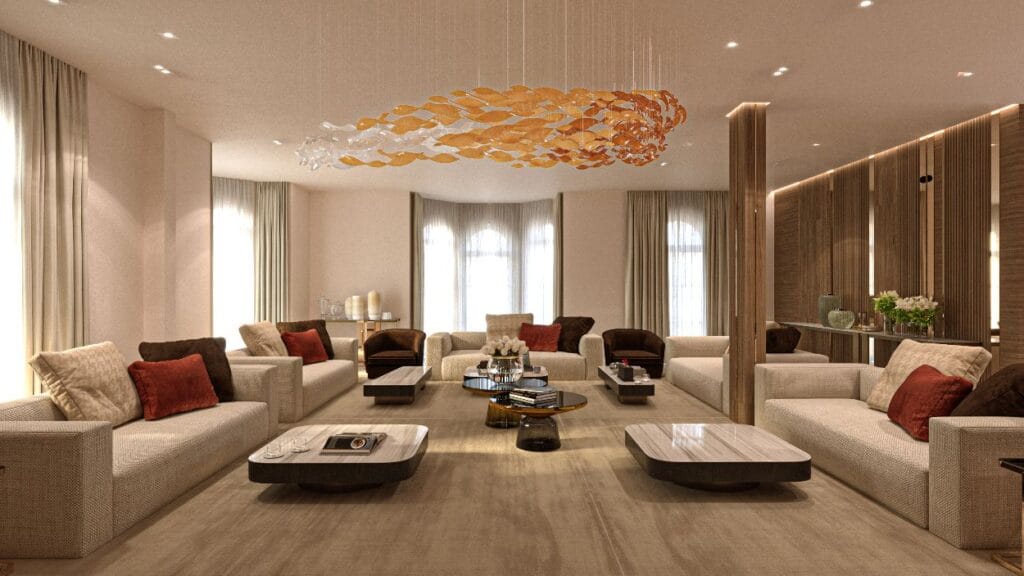
Private Villa, Abu Dhabi

Luxury interior design in Dubai exists within a unique environment.

Dubai embraces innovation, ambition, architecture, and rapidly evolving lifestyles. New trends emerge constantly, influenced by global design movements, luxury hospitality concepts, and digital culture.

At the same time, clients expect long-term value from their investment.

Whether it is:

  • A luxury villa renovation
  • A premium apartment interior
  • A hospitality project
  • A commercial office
  • A retail destination

These spaces should continue feeling elegant and relevant for years to come.

After years of delivering luxury interior design and fit-out projects across the UAE, companies like Magicpoint Decoration have witnessed countless design trends rise in popularity and eventually disappear.

One lesson consistently remains true:

The interiors that age beautifully are rarely the ones designed entirely around trends.

They are the ones built on strong foundations.

Thoughtful layouts.
Balanced proportions.
Timeless detailing.
Quality materials.
Comfort-focused planning.

The most successful interior design projects in Dubai understand how to balance innovation with longevity.

They embrace modern ideas where they add value, but avoid allowing short-term trends to dominate permanent design decisions.

This creates interiors that feel modern today while remaining beautiful years later.

The Materials That Age Beautifully

Materials play a major role in timeless interior design.

Some materials improve with age, while others lose their appeal surprisingly quickly.

The most successful luxury interiors often rely on authentic materials that have proven their value over decades rather than seasons.

Natural Stone

Marble, limestone, and travertine have remained desirable for centuries because they add texture, depth, and authenticity.

Wood

Wood introduces warmth and character into a space. Unlike many synthetic materials, quality wood often becomes more beautiful over time.

Metal Details

Brushed brass, bronze, and blackened steel create elegance without overwhelming the interior.

High-Quality Fabrics

Natural textiles add comfort, sophistication, and softness while supporting a timeless aesthetic.

The common factor is authenticity.

Materials that feel genuine tend to age far more gracefully than materials selected purely because they are currently fashionable.

Why Balance Matters More Than Fashion

Many people assume luxury interiors require more visual impact.

More textures.
More statement pieces.
More colors.
More decoration.

Yet some of the world’s most elegant interiors achieve the opposite.

They simplify.

They refine.

They create balance.

Balance allows architecture to breathe. It allows materials to stand out naturally and helps people feel emotionally comfortable within a space.

Luxury often begins when every design element serves a purpose.

When nothing feels excessive.
When nothing feels missing.

This sense of harmony is one of the most sophisticated forms of interior design.

And unlike trends, balance never goes out of style.

What Luxury Hotels Teach Us About Timeless Design
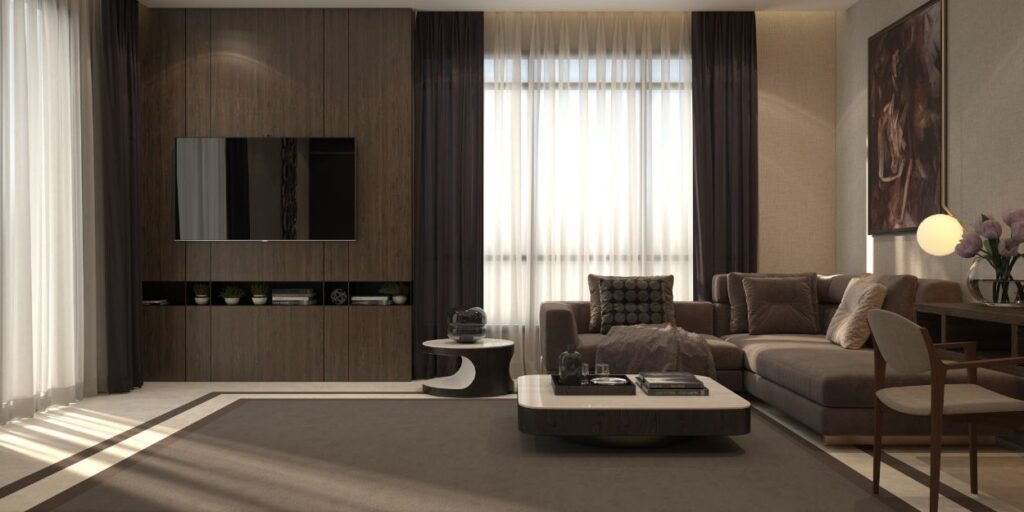
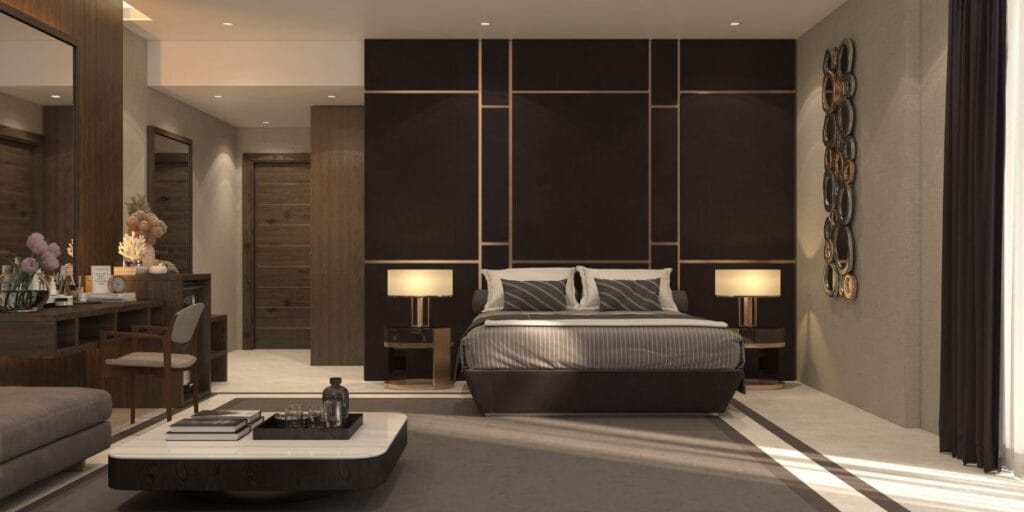
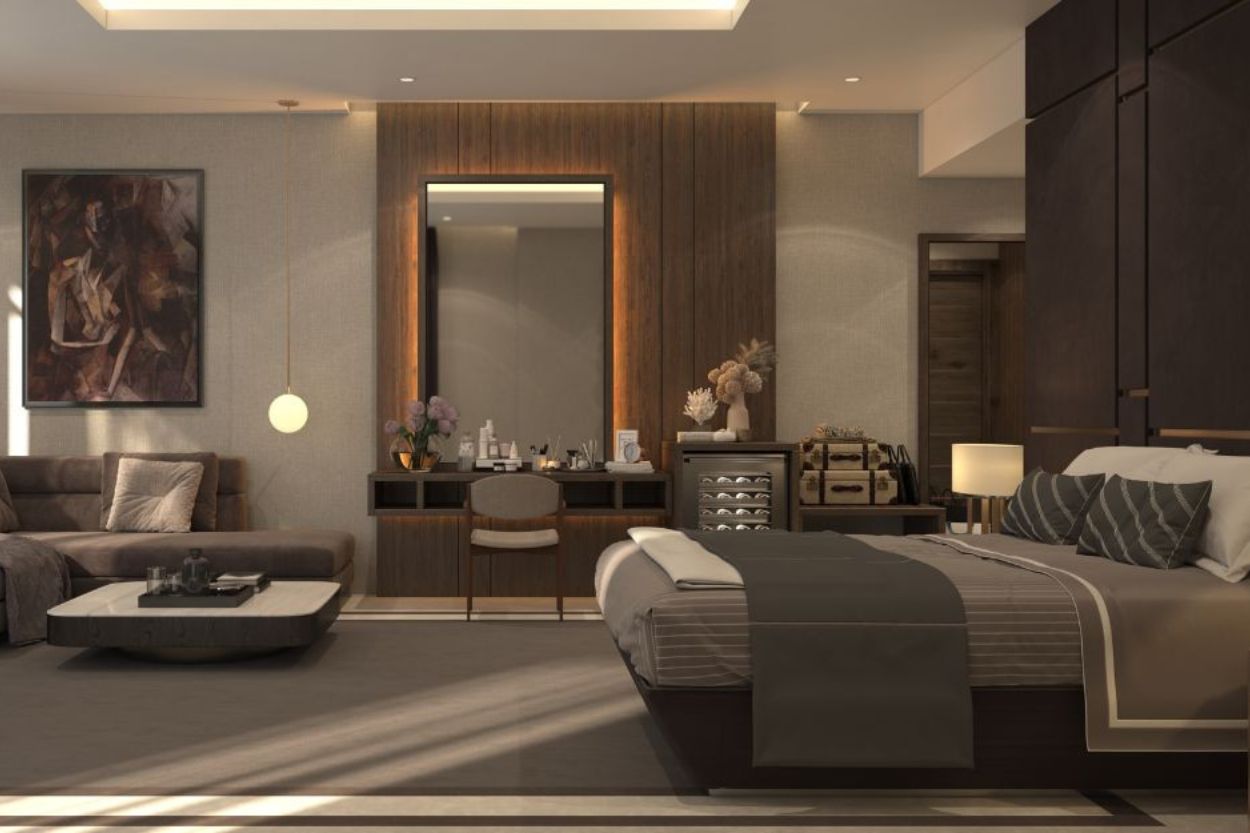
Hotel Bedroom

Luxury hospitality design offers one of the best lessons in timeless interiors.

Hotels cannot redesign every year to follow trends. Their interiors must remain attractive and comfortable for long periods.

The world’s best hotels understand this.

They focus on:

  • Atmosphere
  • Comfort
  • Lighting
  • Spatial flow
  • Material quality
  • Emotional experience

The result is an environment that continues to feel elegant long after trends have changed.

This is one reason many homeowners today seek hotel-inspired interior design.

They are not simply looking for hotel furniture.

They are searching for the feeling exceptional hospitality creates:

Calmness.
Comfort.
Ease.
Sophistication.

Where Trends Should Be Used in Interior Design

This does not mean trends should be completely ignored.

The best luxury interiors often include carefully selected contemporary influences.

The key is knowing where trends belong.

Good Areas to Introduce Trends

  • Artwork
  • Decorative lighting
  • Accessories
  • Accent furniture
  • Styling details

These elements can easily evolve over time.

Areas Where Timelessness Should Lead

  • Flooring
  • Kitchens
  • Bathrooms
  • Architectural details
  • Joinery
  • Core material selections

These are long-term investments that should remain beautiful and functional for many years.

The most successful interiors combine timeless foundations with carefully chosen modern accents.

This creates freshness without sacrificing longevity.

Designing a Space You Will Still Love Years Later

One simple question can completely change the design process:

“Will I still love this five years from now?”

When clients ask this question, priorities often shift.

Comfort becomes more important.
Quality becomes more important.
Functionality becomes more important.

The focus moves beyond short-term visual impact toward long-term satisfaction.

Timeless luxury interiors are designed for real life.

They support routines naturally.
They adapt to changing lifestyles.
They continue feeling comfortable and elegant over time.

This long-term perspective is one of the defining characteristics of successful luxury interior design.

Final Thoughts

There is nothing wrong with wanting a visually impressive space.

Luxury interior design should inspire. It should create memorable experiences and reflect personal aspiration.

But there is a major difference between impressing people temporarily and creating an interior that continues to bring comfort and beauty year after year.

One is temporary.

The other is lasting.

The most successful interiors achieve both.

They create an immediate impression while remaining timeless, comfortable, and emotionally relevant long after trends evolve.

This is the true value of timeless interior design.

Not because it avoids change, but because it understands what never changes:

The human desire for beauty.
Comfort.
Balance.
Calmness.
Belonging.

And that is why timeless interiors continue to outperform trends.

Frequently Asked Questions

What makes a luxury interior design project successful?

A successful luxury interior combines functionality, comfort, quality materials, thoughtful lighting, and a design that reflects the client’s lifestyle rather than temporary trends.

How do I choose the right interior design style for my home in Dubai?

The best approach is to start with how you want the space to feel rather than how it should look. A professional interior designer can help balance personal taste, functionality, and long-term value.

What materials work best for luxury interiors in the UAE climate?

Natural stone, porcelain slabs, engineered wood, premium fabrics, and high-quality metal finishes are often preferred because they combine durability with timeless elegance.

Are design trends bad for luxury interiors?

Not at all. Trends can add freshness and personality. The key is using them in elements that can be updated easily, while keeping the foundation of the space timeless.

Why do some luxury interiors feel more comfortable than others?

Comfort is influenced by lighting, layout, acoustics, proportions, materials, and flow. Luxury is often felt emotionally before it is noticed visually.

What is the difference between expensive and luxurious interior design?

Expensive design focuses on cost. Luxury design focuses on experience, craftsmanship, comfort, detail, and lasting value.

How can hotel-inspired design improve a villa or apartment?

Hospitality design emphasizes comfort, relaxation, lighting, flow, and atmosphere. These principles help create homes that feel calm, elegant, and welcoming.

How long should a well-designed luxury interior remain relevant?

A thoughtfully designed interior should remain beautiful and functional for many years, requiring only minor updates rather than complete renovations.

Why do many luxury hotels avoid extreme design trends?

Because hospitality projects are built for long-term guest satisfaction. Hotels often prioritize comfort, quality materials, and timeless design principles over short-lived trends.

Why do clients choose experienced interior design companies in Dubai?

Experience helps designers make better decisions about materials, layouts, lighting, functionality, and long-term performance. Companies that have delivered projects across villas, hospitality, retail, and commercial sectors bring valuable practical knowledge to every project.
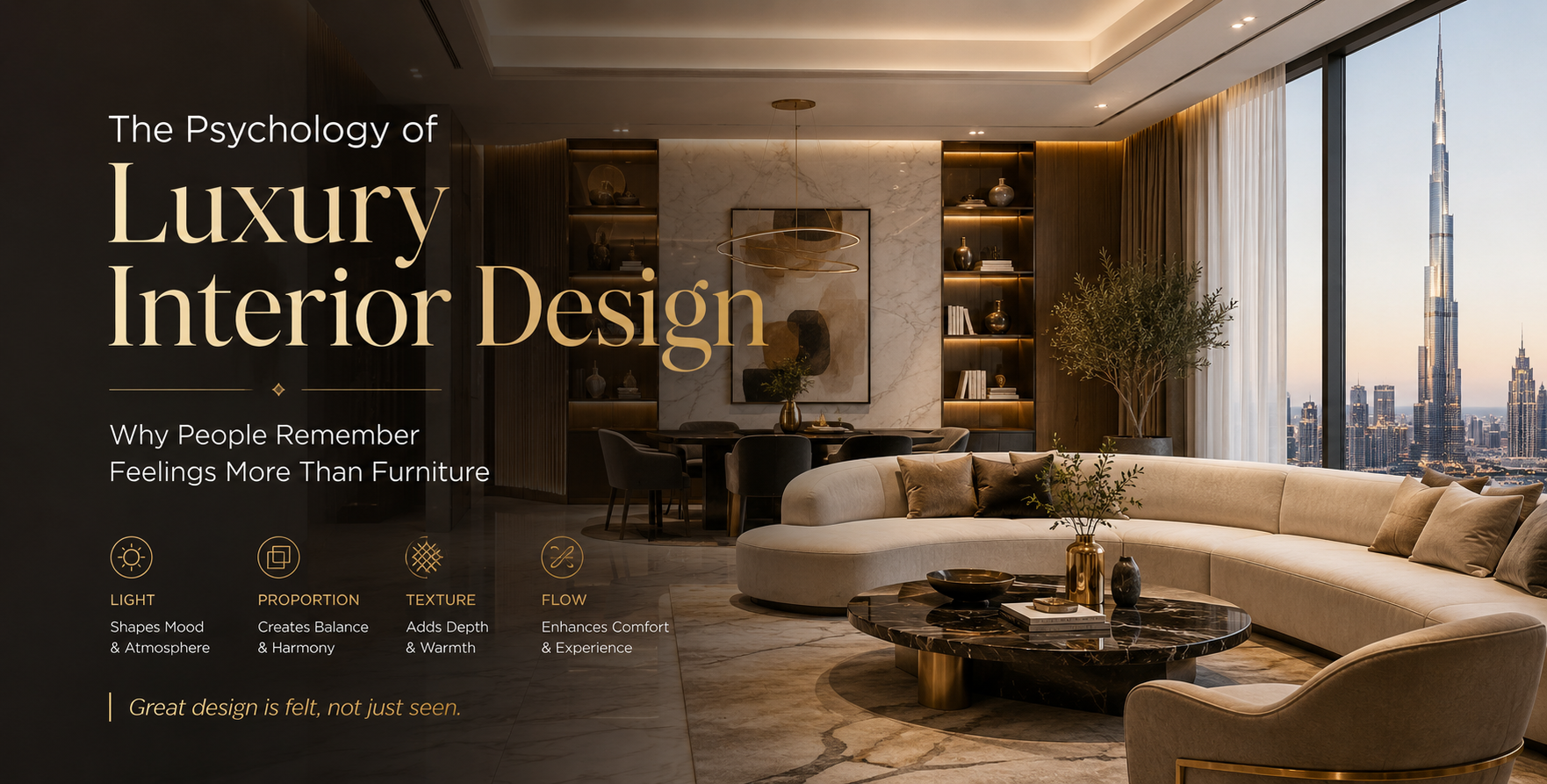
The Psychology of Luxury Interior Design

The Psychology of Luxury Interior Design

Why People Remember Feelings More Than Furniture

In luxury interior design, people rarely remember every piece of furniture, the exact wall color, or the brand of lighting used in a space. What they remember most is how the environment made them feel.

A beautifully designed villa, hotel, restaurant, or office leaves a lasting impression not because of decoration alone, but because of the emotional experience it creates. The feeling of calm, warmth, comfort, elegance, or inspiration often stays with people long after they leave the space.

This is the true psychology behind luxury interior design.

At Magicpoint Decoration, modern interior design is no longer only about aesthetics. It is about creating environments that improve the way people live, work, relax, and connect.

Why Emotion Matters More Than Decoration

Private Villa, Abu Dhabi

Many people associate luxury interiors with expensive furniture, marble finishes, chandeliers, or decorative accessories. While these elements can enhance a space, they are not what truly define luxury.

People connect emotionally to spaces.

A well-designed interior can make someone feel:

  • Relaxed after a stressful day
  • Comfortable during a meeting
  • Inspired inside a workspace
  • Welcomed in a hotel or restaurant
  • Peaceful inside their own home

This emotional response is what separates ordinary interiors from exceptional ones.

The most successful interior design projects are carefully planned around human experience, not just visual appearance.

The Psychology of Comfort in Interior Design

Comfort is not only physical. It is deeply psychological.

A room may contain premium furniture and luxurious materials, yet still feel uncomfortable or overwhelming. Another room may appear visually simple while feeling warm, calm, and inviting.

This happens because human beings naturally respond to environmental factors such as:

  • Lighting
  • Proportion
  • Texture
  • Spatial flow
  • Acoustics
  • Color balance
  • Natural materials

Often, people notice these elements subconsciously.

Luxury interior design focuses on creating emotional comfort through thoughtful planning and balanced design decisions.

In a fast-paced city like Dubai, where modern lifestyles can feel demanding and overstimulating, people increasingly seek interiors that provide calmness, functionality, and mental clarity.

Why Balance Is More Important Than Excess

One of the biggest misconceptions about luxury interior design is the idea that “more” automatically means “better.”

More decoration.
More materials.
More visual impact.

In reality, the most refined interiors are often the most balanced.

True luxury comes from restraint, harmony, and intentional design.

This is why modern luxury villas, hospitality spaces, and contemporary residences often feel sophisticated without appearing crowded or overly decorative.

Balance in interior design involves:

  • Proper furniture placement
  • Correct proportions
  • Visual harmony
  • Controlled color palettes
  • Consistent materials
  • Functional layouts

When these elements work together naturally, a space feels effortless and elegant.

What Makes an Interior Feel Luxurious?

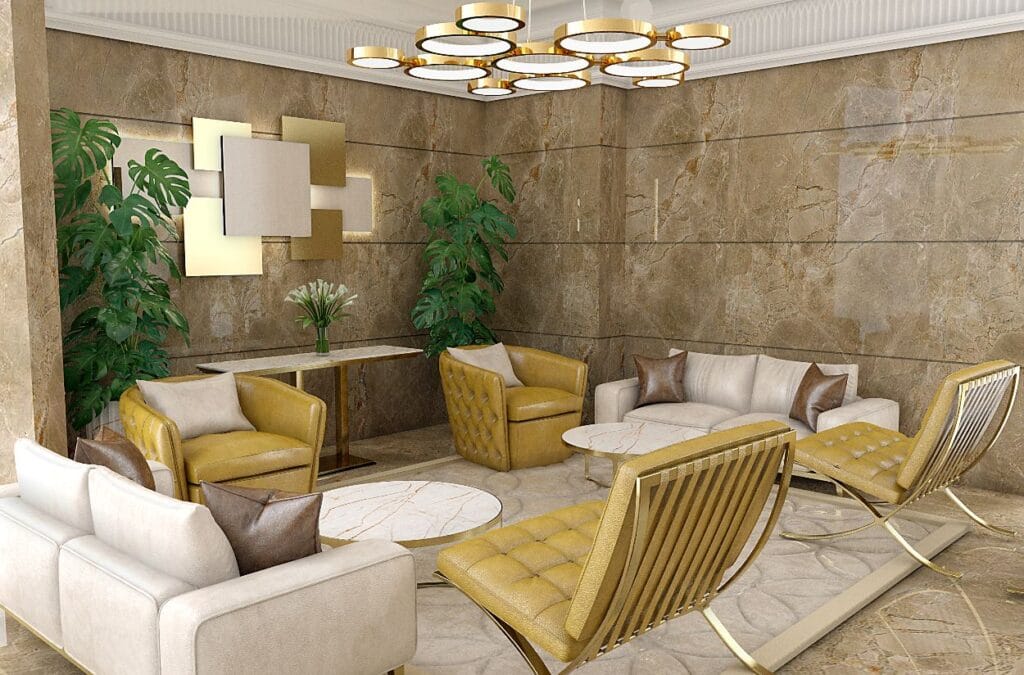
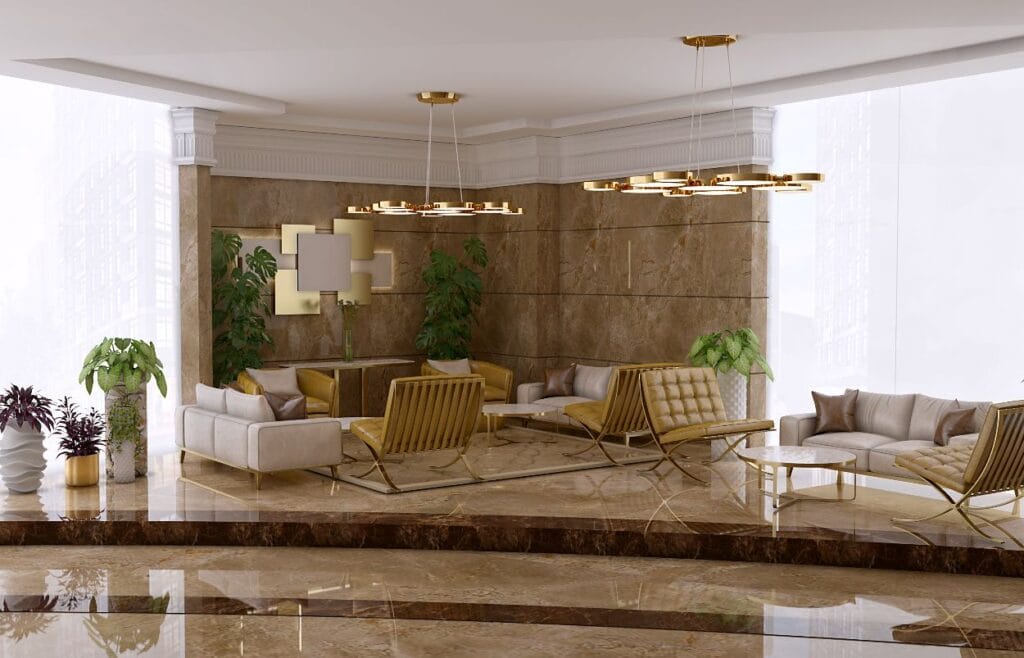
Al Waleed Paradise Lobby

Many people searching for luxury interior design in Dubai ask the same question:

“What actually makes a space feel expensive?”

The answer is rarely a single dramatic feature.

Luxury is usually created through hundreds of thoughtful details working together seamlessly.

A luxurious interior often includes:

Layered Lighting

Lighting shapes mood, atmosphere, and comfort. Warm lighting creates relaxation, while natural lighting adds energy and openness.

High-Quality Materials

Natural stone, wood, metal, textured fabrics, and premium finishes add depth and authenticity to a space.

Precise Craftsmanship

Luxury becomes visible in the details — clean lines, precise joinery, seamless finishes, and refined construction quality.

Balanced Proportions

Furniture, ceiling height, spacing, and layout must feel visually balanced to create comfort and harmony.

Functional Spatial Planning

A luxury space should not only look beautiful but also support daily living effortlessly.

This is why even compact apartments or smaller villas can feel highly luxurious when designed correctly.

Why Some Spaces Instantly Feel Calm

Have you ever entered a hotel room, luxury villa, or modern office and immediately felt relaxed?

Usually, the feeling comes from subtle design psychology rather than obvious decoration.

The lighting feels soft.
The room feels organized.
The materials feel natural.
Nothing feels visually overwhelming.

The human brain naturally responds positively to order and balance.

When interiors contain excessive visual clutter or poor spatial planning, stress levels often increase without people realizing it.

Luxury hospitality design uses this principle exceptionally well. The world’s best hotels are designed to reduce stress and create emotional comfort from the moment guests enter the space.

Today, calmness itself has become a modern symbol of luxury.

The Importance of Light, Texture, Proportion, and Flow

Successful luxury interiors are built around several core design principles that quietly influence how people experience a space.

Light

Lighting is one of the most powerful elements in interior design.

  • Warm lighting creates intimacy
  • Natural lighting improves mood
  • Layered lighting adds sophistication
  • Accent lighting enhances textures and materials

Even the most expensive interior can feel incomplete under poor lighting conditions.

Texture

Luxury is not only visual — it is tactile.

Natural textures such as wood, stone, linen, leather, and brushed metals create richness without unnecessary decoration.

This is why modern luxury interiors increasingly prioritize authentic materials and sensory experiences.

Proportion

Correct proportions create visual comfort.

The relationship between furniture, ceiling height, room dimensions, and empty space significantly affects how a room feels emotionally.

Spatial Flow

Flow refers to how people naturally move through a space.

The best interiors guide movement effortlessly without confusion or visual obstruction.

This is especially important in luxury residential interiors, commercial spaces, and hospitality design projects.

Why the Best Interior Designs Never Feel Forced

Private Villa, Sharjah

One of the most fascinating aspects of luxury interior design is that the best spaces often appear effortless.

Behind that simplicity is usually extensive planning, experience, and refinement.

Exceptional interior design requires:

  • Deep understanding of human behavior
  • Attention to detail
  • Material knowledge
  • Spatial awareness
  • Lighting expertise
  • Functional planning

The goal is not to impress people with complexity.

The goal is to create spaces that simply feel right.

Modern Luxury Interior Design in Dubai

Luxury interior design in Dubai has evolved significantly in recent years.

Today’s clients increasingly prioritize:

  • Comfort over excess
  • Timeless design over temporary trends
  • Functionality over visual clutter
  • Quality over quantity
  • Calm environments over overstimulation

Modern luxury homes, offices, restaurants, retail spaces, and hospitality projects now focus more on lifestyle enhancement and emotional experience.

The most respected interior design companies in Dubai understand that modern luxury is no longer defined by how much is added to a space.

It is defined by how intelligently everything works together.

This is why contemporary luxury interiors often feature:

  • Neutral color palettes
  • Natural materials
  • Minimalist elegance
  • Thoughtful lighting design
  • Open spatial planning
  • Clean architectural lines

Luxury has become quieter, more refined, and more emotionally intelligent.

How Great Interior Design Improves Everyday Life

The highest level of interior design is achieved when people stop noticing the design itself and simply enjoy living within the space.

A successful home supports family routines naturally.

A successful office improves productivity without distraction.

A successful restaurant creates comfort and atmosphere effortlessly.

A successful hotel room helps guests relax immediately.

This is where luxury interior design becomes truly meaningful.

It quietly improves everyday experiences without demanding attention.

Final Thoughts

People rarely remember every detail of a space.

They remember how the environment made them feel.

They remember comfort.
They remember calmness.
They remember warmth.
They remember atmosphere.

This is the real power of luxury interior design.

At its best, interior design is not simply about furniture or decoration. It is about creating environments that enhance emotions, support lifestyles, and improve the quality of daily life.

That is why the most unforgettable interiors are not necessarily the loudest or most extravagant.

They are the ones that feel effortless, balanced, and deeply human.

Frequently Asked Questions

What is the psychology of luxury interior design?

The psychology of luxury interior design focuses on how spaces influence human emotions, comfort, mood, and behavior through lighting, proportion, materials, textures, and spatial planning.

What makes an interior feel luxurious?

Luxury interiors feel sophisticated through balance, quality materials, refined lighting, craftsmanship, and thoughtful functionality rather than decoration alone.

Why do people remember feelings more than furniture?

Human memory is strongly connected to emotional experiences. People often forget specific objects but remember how a space made them feel emotionally.

Why is lighting important in interior design?

Lighting shapes atmosphere, improves comfort, enhances textures, influences mood, and creates visual depth within a space.

Can small spaces feel luxurious?

Yes. Luxury is not determined by size. Small spaces can feel elegant and sophisticated when designed with proper layouts, premium materials, balanced proportions, and intelligent lighting.

Why is timeless interior design important?

Timeless interiors remain functional and visually appealing for years because they focus on balance, comfort, quality materials, and enduring design principles instead of short-term trends.

Why is modern luxury interior design becoming more minimal?

Modern luxury design increasingly prioritizes emotional comfort, calmness, functionality, and quality over excessive decoration and visual clutter.

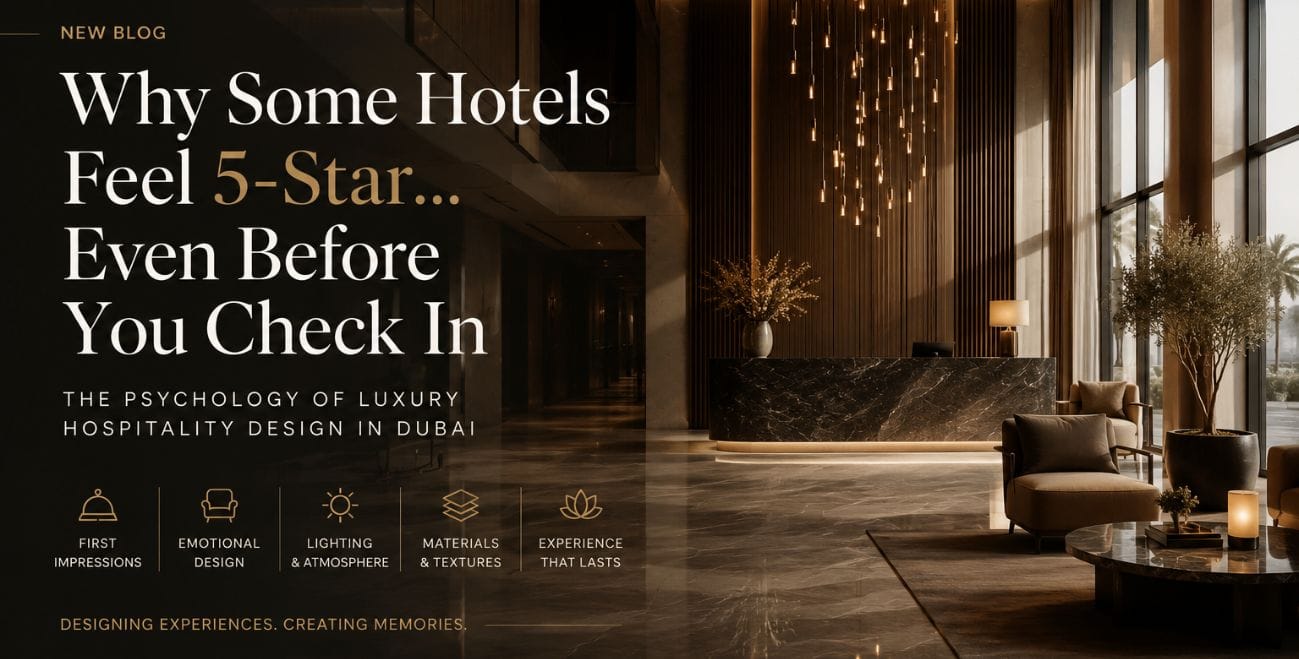
Why Some Hotels Feel 5-Star… Even Before You Check In

Why Some Hotels Feel 5-Star… Even Before You Check In

The Psychology of Luxury Hospitality Design in Dubai

Before a guest reaches reception, something important has already happened.

A feeling has formed.

The lighting, scent, silence, materials, and flow of the space begin shaping emotional perception within seconds. Guests may never consciously analyze these details, but they feel them immediately.

This is the true power of luxury hospitality interior design.

In Dubai’s highly competitive hotel industry, exceptional hotels are no longer defined only by beautiful decoration or expensive materials. They are defined by atmosphere, emotional comfort, and how naturally the guest experience unfolds.

Because truly memorable hotels begin long before check-in.

Luxury Hospitality Design in Dubai Has Evolved

Hotel Bedroom

Dubai has become one of the world’s leading luxury hospitality destinations. Modern travelers arrive having experienced luxury hotels, resorts, and boutique hospitality brands across Europe, Asia, and the Middle East.

As expectations evolve, hotel interior design in Dubai has moved far beyond aesthetics alone.

Today’s luxury hospitality spaces must create:

  • emotional comfort,
  • visual calmness,
  • seamless movement,
  • sensory balance,
  • and memorable guest experiences.

Guests no longer want spaces that simply look luxurious.

They want spaces that feel intentional.

First Impressions Define the Entire Experience

Some hotels feel expensive.

Others feel luxurious.

There is a difference.

A hotel can contain marble, chandeliers, and premium finishes yet still feel cold or overwhelming. Meanwhile, another hotel may use softer lighting, warm textures, balanced proportions, and thoughtful space planning to create a far more powerful emotional response.

This is where hospitality design becomes psychological.

The arrival experience matters deeply:

  • entrance design,
  • lobby atmosphere,
  • lighting transitions,
  • acoustic comfort,
  • and spatial flow

all shape how guests emotionally experience the property within moments.

Luxury hotels understand that the space itself begins communicating before staff ever speak.

Why Lighting Matters So Much in Hotel Design

Lighting is one of the most important elements in hospitality interior design.

In luxury hotels, lighting should never feel harsh or overly bright. Instead, it should feel layered, calm, and adaptive throughout the day.

Modern hotel lighting design often combines:

  • ambient lighting for atmosphere,
  • accent lighting for depth,
  • decorative lighting for identity,
  • and task lighting for functionality.

When done correctly, guests rarely notice the lighting itself.

They simply feel comfortable inside the space.

And in luxury hospitality, comfort is one of the highest forms of sophistication.

The Rise of Quiet Luxury in Hospitality Interiors

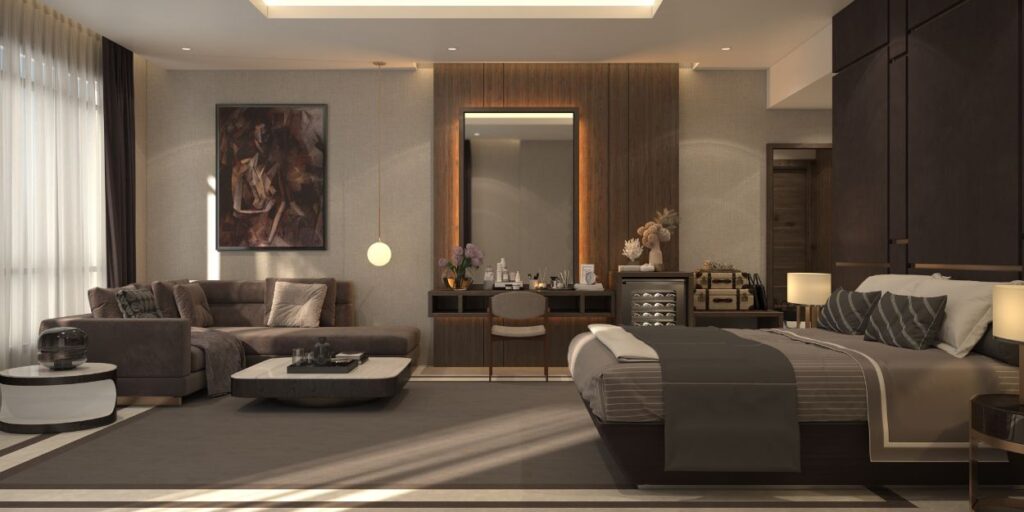
Hotel Bedroom

Many of today’s most elegant hotels focus on what designers now call “quiet luxury.”

Rather than relying on visual excess, quiet luxury emphasizes:

  • warm wood textures,
  • natural stone,
  • soft fabrics,
  • muted palettes,
  • and balanced material harmony.

This style creates emotional calmness rather than overstimulation.

In Dubai’s visually competitive hospitality market, this restrained sophistication often stands out more than overly decorative interiors.

Because modern guests are not only searching for beauty.

They are searching for relief, comfort, and emotional ease.

Why Well-Designed Hotel Rooms Feel Effortless

A luxury hotel room should feel intuitive from the moment the guest enters.

This happens through thoughtful hospitality space planning, including:

  • balanced proportions,
  • functional zoning,
  • integrated storage,
  • visual simplicity,
  • and clear circulation.

The guest should not need to think about how the room works.

The room should simply feel natural.

This is one of the most overlooked aspects of successful hotel room interior design in Dubai.

When friction disappears, relaxation begins.

And relaxation creates emotional attachment to the space.

The Lobby Is the Emotional Heart of the Hotel

In hospitality design, the lobby is far more than a waiting area.

It is the emotional center of the property.

The best luxury hotel lobbies create:

  • openness without emptiness,
  • intimacy without confinement,
  • elegance without excess,
  • and comfort without visual noise.

Successful lobby design is carefully shaped through:

  • architectural scale,
  • furniture placement,
  • lighting,
  • acoustics,
  • and material selection.

When these elements work together, guests naturally slow down, relax, and emotionally connect with the environment.

Luxury Hospitality Design Also Impacts Business Performance

Luxury hospitality interior design is not only about appearance.

It directly affects:

  • guest satisfaction,
  • online reviews,
  • repeat bookings,
  • customer loyalty,
  • and hotel brand perception.

In Dubai’s hospitality market, where guest expectations are extremely high, emotionally intelligent design has become a major competitive advantage.

Guests increasingly remember hotels that feel:

  • calming,
  • refined,
  • timeless,
  • and emotionally comfortable.

This is why thoughtful hotel design is now considered part of the guest experience itself.

Designing Hospitality Spaces in the UAE

Al Waleed Paradise Lobby

Hospitality design in the UAE exists within a unique cultural and environmental context.

Hotels must balance:

  • international luxury expectations,
  • regional identity,
  • climate-conscious design,
  • modern elegance,
  • and practical comfort.

The most successful hospitality interiors in Dubai achieve this balance quietly and naturally.

They feel globally refined while remaining deeply human.

Final Reflection

At the end of a hotel stay, guests rarely remember every furniture detail or decorative object.

But they remember how the space made them feel.

They remember the calmness of the room.

The warmth of the lighting.

The silence of the corridors.

The comfort that arrived almost immediately.

And perhaps this is the true art of luxury hospitality design.

Creating spaces that speak softly — yet remain unforgettable long after the guest leaves.

Luxury Hotel Room Interior Design in Dubai

Creating 5-Star Guest Experiences Through Thoughtful Design

There is a moment, small, almost unnoticeable, when a traveler opens the door to a hotel room.

The corridor behind them still carries the faint echo of footsteps, the distant hum of elevators, the residue of movement. But inside, there is something else. A pause. A stillness.

They step in. And without thinking, without measuring or comparing, they feel something settle within them.

“This is right.”

1. Luxury Is Felt Before It Is Seen

In Dubai’s competitive hospitality landscape, hotel design is no longer defined by visual impact alone. It is defined by experience.

Guests arrive with expectations shaped by global travel. They have seen the finest hotels in the world. They are not impressed by decoration — they respond to feeling.

No guest walks into a room thinking about materials, lighting layers, or spatial planning. They feel something far simpler: a softness in the air, a calm in the arrangement, a warmth that does not ask for attention.

Behind this simplicity lies careful orchestration. Because what appears effortless is never accidental. A room that feels right has already answered many questions: Where should the eye rest? Where should the body relax? Where should the mind let go?

Luxury begins not with what is added — but with what is understood.

2. The Psychology of 5-Star Hotel Room Design

Consider the traveler. They arrive carrying more than luggage.

There is fatigue from movement. Noise from airports, roads, and conversations. A quiet longing for stillness. The room must receive all of this — without resistance. It cannot overwhelm. It cannot demand attention. Instead, it must absorb.

This is the difference between a room that is seen — and a room that is remembered.

3. Materials, Light, and Space: The Three Pillars of Hospitality Design

Hotel Bedroom

Walk slowly through a well-designed space, and something becomes clear: nothing competes. Wood adds warmth and depth. Soft fabrics invite comfort. Neutral tones calm the eye. This balance creates what is known as quiet luxury — a key principle in modern hospitality interior design across the UAE.

In Dubai, where bold design is common, this restraint becomes even more powerful. It communicates permanence: this space is not designed for today — it is designed to last.

Lighting deepens this effect. A refined room uses layers — ambient for mood, task for function, accent for depth. During the day, natural light softens the space. At night, warm lighting creates intimacy. Lighting does not simply illuminate; it shapes how time is experienced within the room.

Space planning completes the picture. Some rooms feel easy — not luxurious in decoration, but effortless in use. A calm sleeping zone, a relaxed seating area, a functional workspace, integrated storage. No unnecessary movements. No confusion. Everything works. And because of this, the guest feels at ease.

4. Detail, Furniture, and the Art of Quiet Luxury

In premium hospitality design, furniture is not chosen to impress. It is chosen to support. Beds are low, wide, and grounded. Sofas are designed for real comfort. Tables are minimal and purposeful. When furniture is correctly proportioned, the space feels complete, the guest feels relaxed, and nothing feels forced.

The true quality of a space, however, is often found in what is not immediately visible: precision in joinery, clean alignment of materials, seamless integration of storage, refined finishing details. These elements shape perception. They create a sense of order and intention.

Without them, something feels missing. With them, the space becomes whole.

5. From Hotel Suites to Dubai Homes: A Lifestyle Shift

A growing trend in Dubai and across the UAE is the desire to bring hotel-level luxury into private homes. Clients are no longer satisfied with traditional bedroom design. They seek integrated vanity spaces, soft layered lighting, walk-in wardrobes, and lounge-style bedroom layouts.

One of the most powerful aspects of luxury driving this shift is silence — not just the absence of sound, but the absence of visual noise. Controlled color palettes, clean lines, minimal clutter, balanced composition. In a fast-moving city like Dubai, this kind of environment becomes essential. It allows the mind to rest.

And this is something people remember long after they leave a hotel — and long after they return home.

6. Why Great Hotel Design Is a Business Asset

Hotel Bedroom

Great design is not only aesthetic — it is strategic. Timeless hotel room design is built on proportion, material quality, functional clarity, and balance. These elements ensure a space remains elegant for years. Trends change quickly. Luxury does not.

A well-designed hotel room contributes to higher guest satisfaction, stronger reviews, increased repeat bookings, and elevated brand perception. In Dubai’s competitive hospitality market, these factors directly influence success.

Design becomes a business asset.

At the end of the stay, the guest leaves. The room remains. Another traveler will arrive, carrying their own journey, their own expectations. And once again, the door will open.

And if the room has been designed well, the same moment will happen again. A pause. A breath.

“This is right.”

Creating spaces like this requires more than design. It requires understanding human behavior, environmental context, material performance, and execution precision. In Dubai and the UAE, where expectations are global and competition is high, this level of clarity defines true luxury.

Because in the end, a hotel room is not just a space. It is an experience that stays with people long after they leave.

Why Some Spaces Sell More Than Others:

The Hidden Psychology Behind Commercial Interior Design in Dubai

Two spaces. Same street. Similar budgets. Similar concepts. One becomes the place everyone talks about. The other wonders, quietly, what went wrong. The difference is rarely what most business owners expect, and understanding it is the beginning of everything.

The business reality most owners overlook

You have built something you believe in. The product is right, the team is ready, the location is good. But the moment a customer walks through your door, before they order, before they browse, before they sit down, they have already made a judgment.

Not about you. About the space.

Your physical environment is not the background to your business. It is an active participant in every transaction that happens inside it. It is working for you or against you from the moment the door opens,  and most business owners in Dubai only discover which one when the numbers start telling the story.

It influences:

  • How long customers stay, and how much they spend while they do
  • How they perceive your brand before a single word is exchanged
  • Whether they feel compelled to return, or simply do not come back

In a market where expectations are genuinely high and every competitor is fighting for the same attention, design is no longer a finishing touch. It is strategy.

Design is not decoration, it is behavior

Most commercial projects begin with the same brief: “Make it look good.”

It is the wrong place to start.

The spaces that truly perform, the restaurants with full tables on a Tuesday night, the offices where people arrive early, the retail stores where browsers become buyers, were not designed to impress. They were designed to guide. Every element was placed with a purpose. Every detail was chosen because of how it makes people feel and what it makes them do next.

A customer walks into a restaurant. They do not consciously notice the lighting, the acoustic panels, or the way the seating is arranged. They simply feel comfortable. They sit down. They stay longer. They order more. They come back. Not one of those outcomes was accidental.

This is commercial interior design done correctly. Not visible. Not impressive. Simply effective, in the truest sense of the word.

The psychology behind high-performing spaces in Dubai

Every detail in a commercial interior influences how people think, feel, and behave, most of the time without them realising it. Understanding these mechanisms is what separates a beautiful space from a performing one.

Element 01

Lighting, setting the emotional tone

Warm light creates comfort and invites people to slow down. Cooler light sharpens focus and signals professionalism. Layered lighting adds depth that people feel without being able to name. In a restaurant, the right lighting keeps tables occupied longer. In an office, it protects energy through the afternoon. Poor lighting, in even the most expensive space, creates a discomfort that quietly drives people away.

Element 02

Layout, the flow of experience

Where do people enter? Where do they naturally pause? Where do their eyes go first? A space that answers these questions correctly makes the customer’s journey feel effortless. A space that ignores them creates friction, missed products, awkward movement, interactions that never quite happen. In Dubai’s commercial environments, where the guest experience defines the reputation, flow is not a detail. It is the foundation.

Element 03

Materials, perceived value before a word is spoken

Dubai clients are design-aware in a way that is distinct from almost any other market. They read materials. Natural stone communicates permanence. Timber communicates warmth. Precision metalwork communicates attention to detail. The material palette of your space tells a story about your standards before your team says a single word, and it will either confirm your price point or quietly undermine it.

Element 04

Colour, communication before logic

Colour reaches people faster than thought. Neutral tones signal calm and refinement. Deep tones create exclusivity. Warm accents generate energy and pull attention. In a restaurant, colour influences appetite and mood. In a retail environment, it directs the eye. In an office, it shapes the culture of the room. Used without intention, colour is noise. Used with precision, it is one of the most powerful tools in the space.

The real cost of designing without strategy

We understand this conversation is uncomfortable. Nobody invests in a space hoping to be told it did not work. But the truth, and we owe you the truth, is that we see it regularly.

Spaces built with genuine care and real budgets. Spaces that look beautiful in photographs. Spaces that simply do not perform because the design was built around appearance rather than purpose.

The cost of poor commercial design is never just aesthetic. It is the customers who do not return. The team that does not settle. The brand perception that forms in the first thirty seconds and never fully recovers. Fixing a space after completion always costs more, in money, in time, and in the reputation that was quietly lost while the problems were building.

This is not said to alarm you. It is said because understanding this risk is what allows you to avoid it, and because you deserve a partner who is honest about what is at stake.

Experience matters, especially in Dubai

What works beautifully in London, Milan, or Tokyo does not automatically translate here. Dubai is its own world, and designing for it requires more than creativity imported from elsewhere.

It requires genuine understanding of how people in this city live, socialise, work, and make decisions. The cultural rhythms. The hospitality expectations. The particular relationship between indoor and outdoor space in a climate like this one. The way luxury is read differently here than anywhere else on earth.

These things cannot be learned from a design book. They come from years of completed projects, real spaces, real clients, real feedback from the market itself. Understanding client expectations, lifestyle patterns, and commercial behaviour in the UAE is what separates average design from results that last.

Beyond trends, designing for performance

Trends have a shelf life. A space built to look current today will need to be rebuilt in three years. We have watched it happen to some of the most visually impressive openings in Dubai, stunning at launch, dated before the lease renews.

The spaces that endure are built on something more durable than what is fashionable right now:

  • Clarity in layout, people always know where to go and feel comfortable getting there
  • Balance in materials, quality that ages with dignity rather than showing its age
  • Precision in execution, the details your clients notice without knowing why
  • Alignment with brand identity, so the space tells your story, not someone else’s

When these elements come together, the result is not just a space that looks exceptional. It becomes a performing asset, one that works for your business every hour it is open.

“The most successful commercial spaces in Dubai are not the most photographed ones. They are the ones people talk about after they leave, and return to without needing a reason.”

The silent power of word of mouth in the UAE

Marketing in Dubai is loud. Every opening is announced. Every renovation is celebrated. And yet the businesses that build the deepest, most durable reputations here do not lead with marketing. They let the experience do the work, and the experience begins the moment someone steps through the door.

When a space truly works, something happens that no advertising budget can replicate: people talk. They bring friends. They recommend without being asked. They become advocates not because they were sold to, but because they felt something inside your walls, and they want the people they care about to feel it too.

In the UAE, word-of-mouth remains one of the strongest signals of genuine quality. It cannot be manufactured. It can only be earned, one well-designed space at a time.

Spaces that work, not just impress

A well-designed commercial space in Dubai does more than photograph beautifully. It supports the growth of your business. It elevates how your brand is perceived. It creates the kind of customer experience that justifies your prices and earns loyalty that outlasts any promotion.

Whether it is a restaurant with tables that stay full, an office where your best people want to spend their time, or a retail space where the product almost sells itself, the difference, in every case, comes back to design.

The right question to start with

What should this space achieve for your business, and for every person who walks through its door?That is where every project at Magicpoint begins. Not with a mood board. Not with a budget conversation. With a genuine understanding of what you are building and who it is for.

When design is aligned with purpose, it stops being an expense. It becomes the reason people choose you over everyone else on the same street.

The first conversation is free. And it begins with listening.

Your Villa Has Everything. So Why Doesn’t It Feel Like Yours?

The truth about interior design in Dubai.  and why the difference between a house that impresses visitors and a home that restores you every single day comes down to decisions most people never knew they were making.

The moment every Dubai villa owner recognises

You have the keys. The developer has handed over a property with marble flooring, generous ceiling heights, finishes that photograph beautifully. On paper, it is everything.

And yet you walk through the door on the first real evening, the light is wrong, the furniture looks smaller than it did in the showroom, and there is a feeling you cannot name. Something is missing. Not an object. A feeling.

This is not a rare experience. It is, in fact, the most common one. And it is not your fault. The problem is not your taste. The problem is that the villa was designed to sell , not to be lived in by you, specifically, in the way you actually live.

There is a critical difference between a space that looks expensive and a space that feels like home. One is surface-level. The other is structural. And closing the gap between them requires a specific kind of knowledge that has nothing to do with buying better furniture.

“Luxury is not what you see first. It is what you feel.”

What a home that is truly designed for you actually feels like

Private Villa By Mahicpoint
Private Villa By MagicPoint

Imagine coming home after a difficult day. The light in your entrance hall is warm without being theatrical. The living space draws you in without demanding anything of you. The kitchen , your kitchen , makes the act of preparing a meal feel like a pleasure rather than a chore.

Your children move through the house with freedom. Guests arrive and feel immediately welcome without you having to manage anything. And when the house is finally quiet, there is a quality to the silence that is restoring, not just neutral.

This is not a fantasy. It is the result of specific, deliberate decisions made before a single piece of furniture enters the space. It starts with a question that most interior projects never ask properly:

Not: “What style do you like?”
But: “How do you actually live , and what does your home need to do for you every single day?”

In Dubai, homes are uniquely complex. They host family life, business dinners, cultural gatherings, and personal retreat , often in the same week. A villa in Arabian Ranches lives differently to one in Palm Jumeirah. A family with three children moving from Jumeirah to Dubai Hills needs a completely different design logic than an executive couple relocating from Europe.

When these layers are understood before design begins, every decision becomes intentional. The living room becomes a place of genuine connection. The master suite becomes a sanctuary. The dining space becomes an experience rather than a furniture arrangement.

What the Dubai villa client actually wants

The definition of luxury in Dubai has shifted. The current generation of villa owners is not impressed by opulence for its own sake. They want spaces that are quiet, intentional, and genuinely theirs. The trends confirm this: biophilic elements, earthy palettes drawn from the desert, custom joinery, and the invisible integration of smart home technology.

What has not changed is the underlying need. Every client , from Jumeirah Bay to Dubai Hills , wants to walk into their home and feel that it was made for them. Not assembled for them. Made.

Why design intelligence matters more than design taste

Private Villa, Sharjah

Most people approach interior design through aesthetics. They scroll Instagram, save images, describe a mood board. This is a starting point , not a design process.

The decisions that actually determine whether your home works are largely invisible:

  • Space planning , the architecture of movement through a room, before any furniture is placed
  • Lighting design , not just fixtures, but the layering of light for different times of day and different needs
  • Material selection for the UAE climate , not just what looks beautiful, but what ages well under Dubai’s heat and humidity
  • Poportion and flow between rooms , why some large villas feel cramped and some modest apartments feel generous
  • The relationship between inside and outside in a city where outdoor living is central to lifestyle

These are not things you can learn from a mood board. They require years of executed work , real projects, real problems solved, real clients who now live differently than they did before.

A sofa placed two feet from where it belongs can ruin a room. A lighting scheme with one wrong layer can make AED 500,000 worth of design feel cheap. These are not aesthetic judgments. They are technical ones.

The same principle, applied to your business space

Everything above applies , with equal precision , to commercial spaces.

A restaurant that is not designed around how guests actually experience a meal will underperform regardless of its food. An office that ignores how your team actually works will drain energy rather than generate it. A retail space that is designed to look impressive rather than to convert browsers into buyers is a liability, not an asset.

The business case for interior design is not aesthetic. It is operational.

  • Customer dwell time increases measurably in well-designed F&B and retail spaces
  • Staff productivity and retention is directly linked to workspace quality , this is documented across UAE and global studies
  • A commercial fit-out that reflects your brand correctly is one of the highest-ROI investments a business owner in Dubai can make
  • First impressions in a client-facing office happen in under seven seconds , and they are almost entirely spatial

We have completed commercial projects across Dubai and the UAE , offices, retail spaces, F&B environments. In every case, the client brief was not “make it look good.” It was “make it work.” Those two things, when design is done properly, are the same thing.

What interior design in Dubai actually costs, honestly

VIP Private Villa, Abu Dhabi

People ask this question privately because they are afraid the answer will be a number. And numbers, in this context, are the wrong way to think about it.

Let us be direct: yes, designing a home well requires investment. But the real question,  the one nobody in this industry asks out loud is not what it costs. It is what you are actually paying for.

You are not paying for furniture. You are not paying for tiles or lighting fixtures or a mood board. You are paying for the feeling your daughter has when she runs through the door every afternoon after school. You are paying for the Sunday mornings that become the memories your family carries for a lifetime. You are paying for the table where decisions get made, where meals become conversations, where your home earns its place in the story of your family.

“A house is built with walls and beams. A home is built with the moments that happen inside it,  and the space that was designed to hold them.”

This is not about spending more. It is about spending with the right intention. A home designed without understanding how you live will need to be redone,  and the cost of that is never just financial. It is the years spent in a space that never quite fit. The comfort that was always slightly out of reach. The feeling of living in someone else’s idea of what your life should look like.

When a home is designed correctly,  for your family, your rhythms, your culture, your way of being together,  it becomes something that cannot be priced. It becomes the place your children remember. The place you return to, every single day, and feel that it was made for you.

The first conversation with us costs nothing. And it begins not with a budget discussion,  but with the only question that matters at the start of any real project: what do you want your home to feel like?

Because when a home is truly designed for you, the question of cost answers itself. The right investment is the one you stop thinking about,  because the life it creates is simply yours.

What we bring to your project that cannot be replicated

Magicpoint Decorations has been designing and fitting out spaces in Dubai and across the UAE for over 14 years. Our work spans luxury villas, residential apartments, offices, hotels, restaurants, and retail environments.

We are based in the heart of Dubai’s professional and creative district , which means we understand the city, its building regulations, its material supply chains, and its clients at a depth that only comes from actually working here, consistently, across a decade.

  • Bespoke design , every project is built around your life, not a template
  • Turnkey delivery , we manage every phase from concept to final handover
  • Transparent process , you are never surprised by a cost or a timeline
  • Material expertise , we work with premium suppliers and know which materials perform in UAE conditions over time
  • Commercial and residential capability , we understand both, and the difference between them

Most of our clients come through recommendation. We do not advertise that to impress you. We say it because it is the most honest signal of consistent quality we can offer. When a home truly works , when the family living in it feels the difference every single day , people notice, and they talk.

Tell us about your space. We will tell you exactly what it needs.

No generic proposals. No estimates based on assumptions. A real conversation about your project, your timeline, and what it will take to get it right. The first consultation is free.

The first consultation is free. And it will change the way you see your space

The Silent Sabotage: How Poor Design Drains Your Energy and Performance

When we walk into a room, our eyes immediately register the colors, the scale, and the style. We categorize it as “modern”, “classic”, or “luxury”. But while our eyes are busy judging the aesthetics, our bodies are conducting a much deeper, more primal assessment. Long before you decide if you like the wallpaper, your nervous system has already decided if it feels safe, focused, or fatigued. This is the “invisible” architecture of a space, the energetic frequency created by the harmony, or disharmony, of its design.

Unfortunately, many spaces today are built for the camera, not the human. They look spectacular in a high-gloss brochure but fail the moment a person tries to live or work within them. This is the Hidden Problem: beautiful spaces that don’t actually work. When a design is functionally weak, it creates a subtle, constant friction that wears down the occupant.

The Cost of a “Wrong” Environment

Poor design is not just a visual disappointment; it is a physical and psychological drain. Think of a space where the lighting is technically “bright” but lacks the warmth of natural cycles. Over a few hours, that artificial glare triggers eye strain and headaches, leading to a dip in cognitive performance. This isn’t just a minor inconvenience; it is a disruption of your circadian rhythm, the internal clock that dictates your energy and mood.

The same applies to materials and spatial planning. A layout that forces you to take awkward paths to get from one point to another creates a “daily frustration” that bubbles under the surface. Materials that look cold and sterile can prevent a home from ever feeling like a sanctuary, leaving the residents unable to truly “recharge” after a high-pressure day in the city.

Even the seating. In a corporate environment, a chair is not just a place to sit; it is a tool for production. Yet, we often see offices where the desks are custom-made and the walls are artfully branded, while the employees sit in chairs that offer zero lumbar support.

When you sit in a chair that doesn’t respect the natural curvature of your spine, your body has to work overtime just to stay upright. This “physical discomfort” is a silent thief of focus. Instead of your brain power going toward innovation or problem-solving, it is being diverted to manage the growing ache in your shoulders. By the afternoon, the “low energy levels” that many attribute to a lack of sleep are actually the result of a chair that is actively fighting against their physiology.

The Magic Point Philosophy

At Magic Point Decoration, we start from a different premise. We believe that a space must solve the problems you feel every day before it ever addresses the ones you see. Our philosophy is rooted in the idea that your environment should be a silent driver of your performance.

We don’t just look at a floor plan; we look at the human flow. We don’t just select furniture; we curate ergonomic systems. We understand that in the UAE’s high-stakes environment, your space, whether it is a luxury villa or a corporate headquarters, must be a place of clarity and belonging. For us, every project begins with understanding how the space should function for the human body and mind. We care about the “invisible” elements because we know that when the environment is right, everything else, focus, energy, and success, follows naturally.

The Science of Energy: How Design DNA Shifts 

In the sophisticated landscape of UAE interior design, the most common mistake is treating “luxury” as a universal aesthetic. True high-end design is not a skin; it is a neurological trigger. Every environment, whether a luxury penthouse in Duba , a corporate headquarters in DIFC, or a flagship boutique in Mall of the Emirates, demands a specific biological response from its occupants.

To achieve a “super-quality” result, one must understand how spatial variables like lux levels, acoustic dampening, and ergonomic geometry directly influence human hormones and cognitive performance.

1. Residential Energy: The Science of Cortisol Reduction and Circadian Rhythm

A home is a biological necessity for “Decompression.” In a city that never sleeps, the residential environment must function as a filter for external stressors.

  • Circadian Lighting Systems: Educational design prioritizes lighting that mimics the natural solar cycle. High-frequency “blue light” (5000K-6500K) is essential for kitchens and morning areas to trigger alertness, while “warm dimming” technology (2200K-2700K) in bedrooms and lounges signals the brain to produce melatonin.
  • Acoustic Insulation for Mental Health: Luxury living is defined by silence. Utilizing high-STC (Sound Transmission Class) materials and bespoke wall paneling isn’t just about privacy; it’s about lowering the constant “background hum” that keeps the nervous system in a state of low-level “fight or flight.”
  • Biophilic Integration: Incorporating organic textures, such as natural stone, sustainable wood, and indoor greenery, is proven to lower heart rates and blood pressure. This creates the “Sense of Belonging” required for long-term emotional well-being.

2. Corporate Energy: Engineering High-Cognitive Flow and Ergonomic Momentum

An office is not a place to “stay”; it is a place to “achieve.” The energy here must be optimized for Deep Work and Collaborative Innovation. When an office is poorly designed, it creates “sensory friction” that leads to burnout.

  • The Ergonomic Infrastructure: The most critical touchpoint in a workspace is the chair. A standard chair forces the body to adapt to the furniture; a high-performance ergonomic chair adapts to the body. By supporting the lumbar 4 and 5 vertebrae, these solutions prevent the physical fatigue that high-level executives often mistake for mental exhaustion.
  • Active vs. Passive Zones: Modern office fit-out strategies in the UAE now focus on “Activity-Based Working” (ABW). This involves designing specialized zones:
    • Focus Pods: High acoustic privacy for deep concentration.
    • Agile Hubs: Flexible furniture and integrated tech for rapid brainstorming.
  • Thermal Comfort and Productivity: Research shows that even a 1-degree shift from the optimal temperature can decrease office productivity by 2%. Precision HVAC integration is as much a part of the “design” as the executive desk.

3. Retail Energy: The Psychology of the “Dwell Time” and Brand Conversion

In a commercial retail fit-out, the architecture is a silent salesman. The energy here is about Discovery and Dopamine.

  • The Power of the “Right-Hand Turn”: Studies in retail psychology show that 90% of customers instinctively turn right upon entering a store. Effective design leverages this “decompression zone” to guide customers through a curated path, maximizing product exposure without creating a “crowded” feeling.
  • Strategic Focal Points: Using accent lighting and high-contrast displays, designers create a visual hierarchy. This prevents “decision fatigue,” a state where a customer feels overwhelmed by choice and leaves without purchasing.
  • Tactile Engagement: In an increasingly digital world, physical retail must offer something a screen cannot: a multi-sensory experience. The “hand-feel” of a display counter or the velvet lining of a fitting room creates an emotional anchor to the brand, increasing the likelihood of conversion and repeat visits.

4. The Unified Vision: Why Turnkey Solutions Are the Standard for Excellence

Achieving this level of environmental precision requires a Turnkey Approach. When the design, the procurement of materials, and the final fit-out are handled by separate entities, the “energy” often gets lost in translation.

A seamless interior design process ensures that the initial 3D visualization, which accounts for light angles, material reflections, and spatial flow, is executed with mathematical precision. This is how “super-quality” brands differentiate themselves: they don’t just deliver a beautiful room; they deliver a controlled environment that supports the specific lifestyle or business goals of the client.

The Engineering of Elegance: Why Turnkey Fit-Out is the Foundation of Success

Private Villa, Sharjah

In the high-stakes world of UAE real estate and commerce, a common tragedy occurs: a visionary interior design is lost in the chaos of poor execution. Many clients experience a “disconnect” where the stunning 3D visualization presented in the boardroom fails to materialize in the actual physical space. This is where the technical fit-out and turnkey approach becomes the most critical phase of any project.

A “Turnkey” solution is not just a convenience; it is a quality-control mechanism that ensures every structural, mechanical, and aesthetic detail is aligned with the original human-centric vision.

Bridging the Gap: From Concept to Completion

The “Fit-Out” phase is where the “Invisible Architecture” we discussed earlier becomes physical. Without a single, accountable partner managing this transition, a project can suffer from “Design Dilution”, where budget constraints, unskilled labor, or poor material sourcing slowly erode the quality of the environment.

  • Integrated Project Management: In a professional turnkey interior project in Dubai, the designer and the contractor work as a single unit. This eliminates the “Daily Frustration” of coordinating between multiple vendors who may not understand the subtle nuances of the lighting or the ergonomic flow.
  • Precision Material Sourcing: The difference between a “good” space and a “super-quality” space lies in the details. Luxury fit-out services involve sourcing premium materials, from high-STC acoustic panels to bespoke joinery, that are both durable and elegant. If the material isn’t right, the “energy” of the room feels off.
  • Timeline and Compliance: The UAE has strict building codes and municipality regulations. A professional turnkey partner handles all approvals (DEWA, Civil Defense, etc.), ensuring that the project is delivered on time without compromising the structural integrity or safety of the space.

The Power of One: The Single Accountable Partner

One of the biggest stress factors for villa owners and business managers is the fragmentation of responsibility. If the lighting is causing fatigue or the layout feels crowded, who is responsible? The designer or the contractor?

The Turnkey Advantage eliminates this uncertainty through:

  1. Seamless Coordination: Every element, from the HVAC ducting to the placement of ergonomic office chairs, is planned in a single master schedule.
  2. Cost Efficiency: By managing the entire supply chain, a turnkey provider prevents “budget creep” caused by ordering incorrect quantities or choosing incompatible materials.
  3. Consistent Quality: When one team is responsible from the first sketch to the final handover, the craftsmanship remains consistent across every square meter.

Transforming Vision into Reality Without Stress

At this level, the goal of a fit-out and turnkey company is to provide peace of mind. For a business owner, a turnkey office allows them to focus on their operations while their environment is built for them. For a homeowner, it means walking into a finished villa that matches their dream down to the last millimetre.

True quality is experienced when a space feels effortless. That effortlessness is only possible through the rigorous, technical, and disciplined execution of a complete fit-out strategy. When the design is intelligent and the execution is flawless, the result is an environment that doesn’t just look like a masterpiece, it performs like one.

Conclusion: The Synergy of Excellence and the Art of the Complete Environment

VIP Private Villa, Abu Dhabi

At its core, premium interior design is no longer about decoration, it is about the meticulous creation of environments that actively enhance human performance and well-being. Whether it is your private residence, a corporate headquarters, or a high-traffic retail boutique, the right space should be a silent partner that reduces stress, sharpens focus, and reflects the true essence of where you are going.

At Magic Point Decoration, we don’t just deliver a service; we deliver a promise of quality, precision, and an elevated way of living. We believe that true luxury is found in the details, the perfect angle of light, the intuitive flow of a hallway, and the structural integrity of a turnkey fit-out.

A Partnership for Performance: Magic Point & Fatio

We understand that a world-class environment is a symphony of moving parts. This is why we curate strategic partnerships with brands that share our obsession with “Super-Quality” and human-centric innovation.

To complete a high-performance workspace, the structural beauty provided by Magic Point must be matched by biological support. We are proud to integrate ergonomic seating solutions from our partner, Fatio General Trading LLC, into our corporate and residential projects. While Magic Point designs the vision, Fatio provides the ergonomic “engine”, chairs that support the human frame through long hours of innovation, ensuring that physical comfort never distracts from your mental brilliance.

Transform Your Vision into a Legacy

If you are ready to move beyond “designed” and into a space that truly “feels right,” we invite you to experience the Magic Point difference. Let us handle the complexity of tailored interior design, fit-out, and turnkey management, while you enjoy the results of a space built to support your life and work.

Ready to redefine your environment? Connect with Magic Point Decoration for expert consultancy on your next project. To ensure your workspace is a sanctuary of comfort and productivity, explore the elite ergonomic collection from our partners at Fatio General Trading LLC.