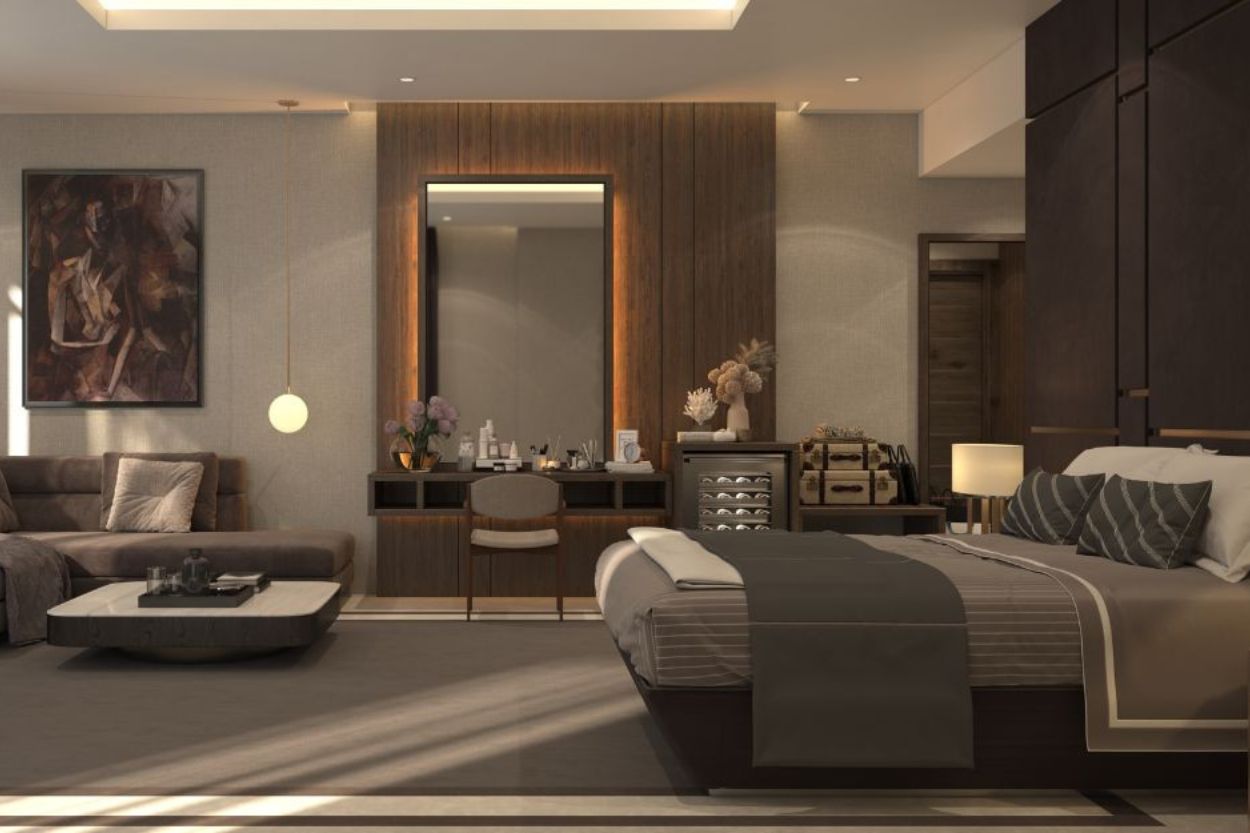
Luxury Hotel Room Interior Design in Dubai
Creating 5-Star Guest Experiences Through Thoughtful Design
There is a moment, small, almost unnoticeable, when a traveler opens the door to a hotel room.
The corridor behind them still carries the faint echo of footsteps, the distant hum of elevators, the residue of movement. But inside, there is something else. A pause. A stillness.
They step in. And without thinking, without measuring or comparing, they feel something settle within them.
“This is right.”
1. Luxury Is Felt Before It Is Seen
In Dubai’s competitive hospitality landscape, hotel design is no longer defined by visual impact alone. It is defined by experience.
Guests arrive with expectations shaped by global travel. They have seen the finest hotels in the world. They are not impressed by decoration — they respond to feeling.
No guest walks into a room thinking about materials, lighting layers, or spatial planning. They feel something far simpler: a softness in the air, a calm in the arrangement, a warmth that does not ask for attention.
Behind this simplicity lies careful orchestration. Because what appears effortless is never accidental. A room that feels right has already answered many questions: Where should the eye rest? Where should the body relax? Where should the mind let go?
Luxury begins not with what is added — but with what is understood.
2. The Psychology of 5-Star Hotel Room Design
Consider the traveler. They arrive carrying more than luggage.
There is fatigue from movement. Noise from airports, roads, and conversations. A quiet longing for stillness. The room must receive all of this — without resistance. It cannot overwhelm. It cannot demand attention. Instead, it must absorb.
This is the difference between a room that is seen — and a room that is remembered.
3. Materials, Light, and Space: The Three Pillars of Hospitality Design
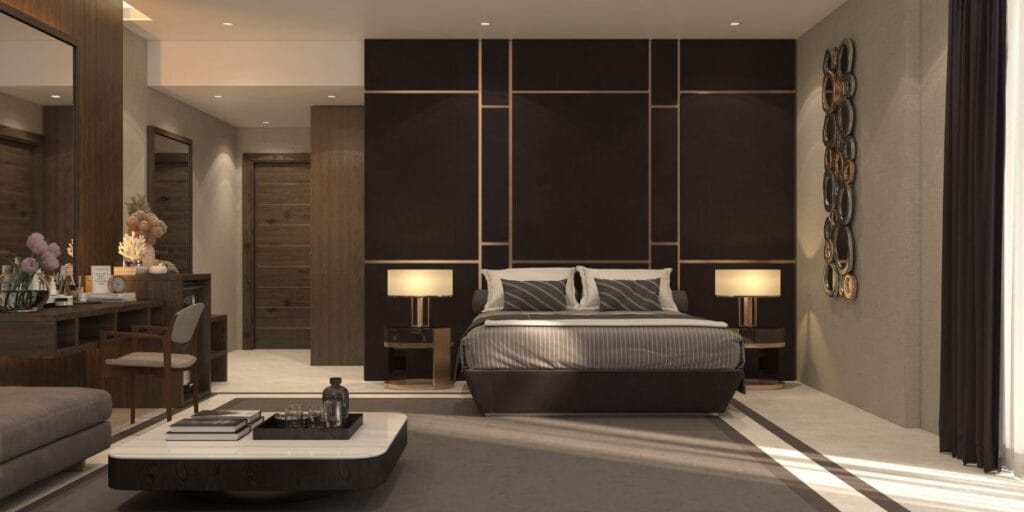
Walk slowly through a well-designed space, and something becomes clear: nothing competes. Wood adds warmth and depth. Soft fabrics invite comfort. Neutral tones calm the eye. This balance creates what is known as quiet luxury — a key principle in modern hospitality interior design across the UAE.
In Dubai, where bold design is common, this restraint becomes even more powerful. It communicates permanence: this space is not designed for today — it is designed to last.
Lighting deepens this effect. A refined room uses layers — ambient for mood, task for function, accent for depth. During the day, natural light softens the space. At night, warm lighting creates intimacy. Lighting does not simply illuminate; it shapes how time is experienced within the room.
Space planning completes the picture. Some rooms feel easy — not luxurious in decoration, but effortless in use. A calm sleeping zone, a relaxed seating area, a functional workspace, integrated storage. No unnecessary movements. No confusion. Everything works. And because of this, the guest feels at ease.
4. Detail, Furniture, and the Art of Quiet Luxury
In premium hospitality design, furniture is not chosen to impress. It is chosen to support. Beds are low, wide, and grounded. Sofas are designed for real comfort. Tables are minimal and purposeful. When furniture is correctly proportioned, the space feels complete, the guest feels relaxed, and nothing feels forced.
The true quality of a space, however, is often found in what is not immediately visible: precision in joinery, clean alignment of materials, seamless integration of storage, refined finishing details. These elements shape perception. They create a sense of order and intention.
Without them, something feels missing. With them, the space becomes whole.
5. From Hotel Suites to Dubai Homes: A Lifestyle Shift
A growing trend in Dubai and across the UAE is the desire to bring hotel-level luxury into private homes. Clients are no longer satisfied with traditional bedroom design. They seek integrated vanity spaces, soft layered lighting, walk-in wardrobes, and lounge-style bedroom layouts.
One of the most powerful aspects of luxury driving this shift is silence — not just the absence of sound, but the absence of visual noise. Controlled color palettes, clean lines, minimal clutter, balanced composition. In a fast-moving city like Dubai, this kind of environment becomes essential. It allows the mind to rest.
And this is something people remember long after they leave a hotel — and long after they return home.
6. Why Great Hotel Design Is a Business Asset
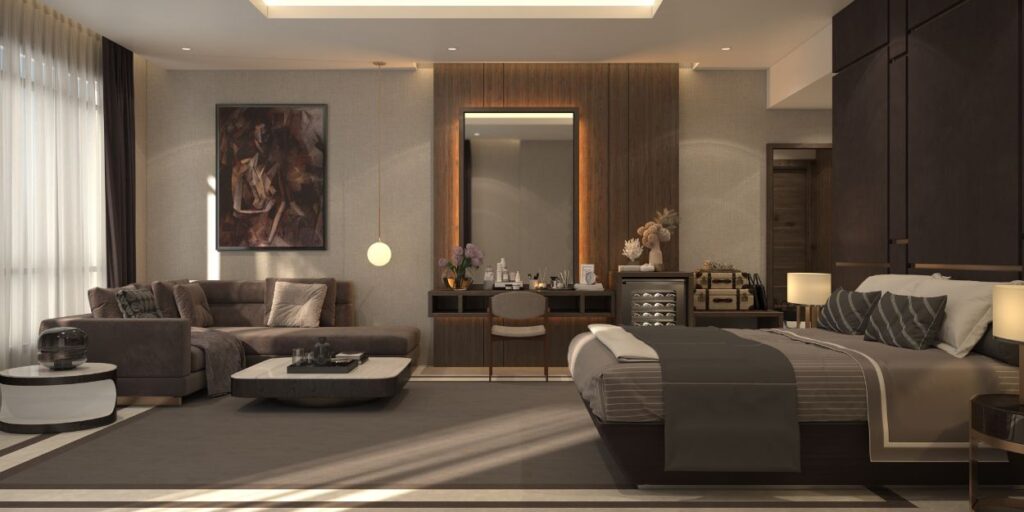
Great design is not only aesthetic — it is strategic. Timeless hotel room design is built on proportion, material quality, functional clarity, and balance. These elements ensure a space remains elegant for years. Trends change quickly. Luxury does not.
A well-designed hotel room contributes to higher guest satisfaction, stronger reviews, increased repeat bookings, and elevated brand perception. In Dubai’s competitive hospitality market, these factors directly influence success.
Design becomes a business asset.
At the end of the stay, the guest leaves. The room remains. Another traveler will arrive, carrying their own journey, their own expectations. And once again, the door will open.
And if the room has been designed well, the same moment will happen again. A pause. A breath.
“This is right.”
Creating spaces like this requires more than design. It requires understanding human behavior, environmental context, material performance, and execution precision. In Dubai and the UAE, where expectations are global and competition is high, this level of clarity defines true luxury.
Because in the end, a hotel room is not just a space. It is an experience that stays with people long after they leave.